
Byline: Maelie & WheninPP
In a fast-paced world that constantly demands to know “what’s next,” Jason—a Phnom Penh native, former tech startup CEO, and proud father—has consciously decided to pause and explore “what was.”
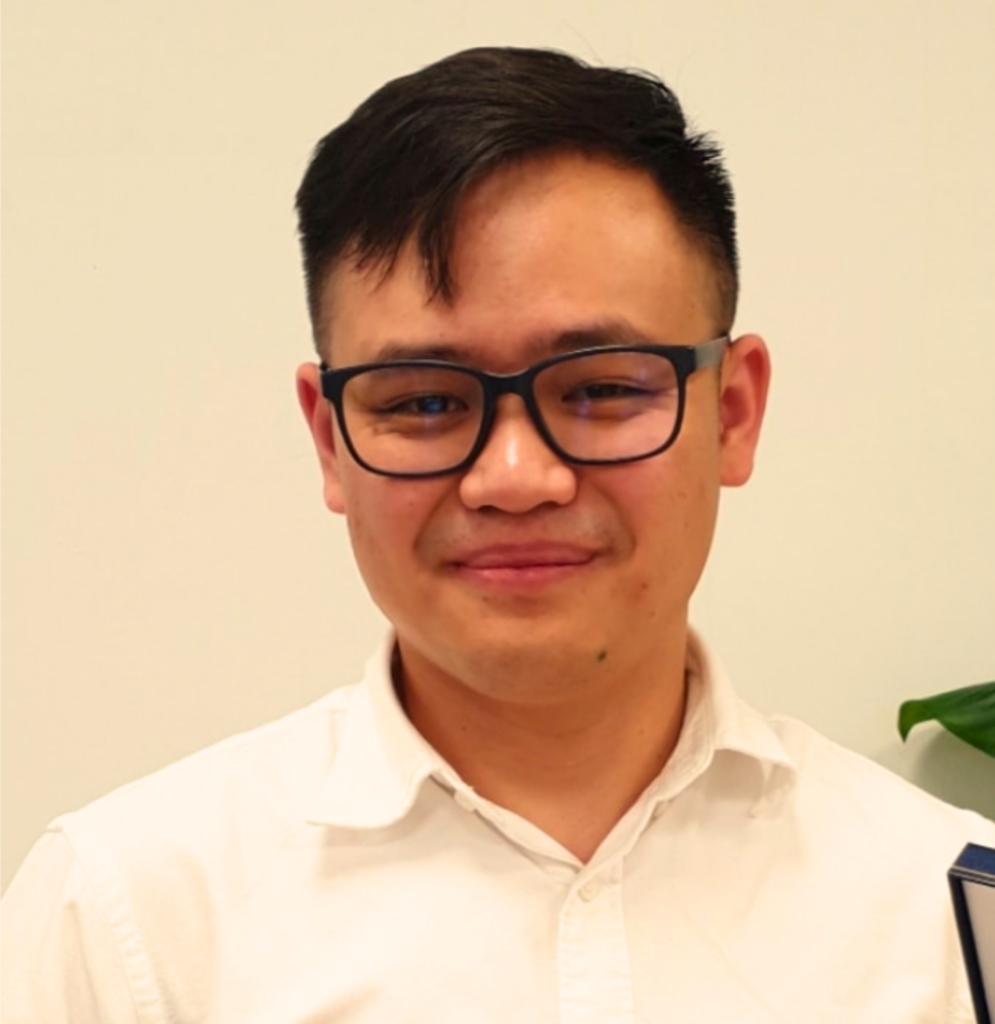
Growing up in the heart of Cambodia’s capital, Jason’s insatiable childhood curiosity eventually led him to the dynamic world of entrepreneurship. However, a life-threatening medical emergency at Calmette Hospital in early 2025, coupled with a turbulent year for Cambodian society, served as a profound wake-up call. Realizing the urgent need to preserve the nation’s rich heritage and leave a meaningful legacy for his daughter and the next generation, Jason shifted his focus from scaling tech products to safeguarding cultural treasures.
This newfound urgency culminated in the release of his book, The Quiet Native. Through a deeply personal collection of 12 stories acting as a memoir, Jason offers a native perspective on the Cambodian experience—aiming to inspire local youth to reclaim their roots while inviting international visitors to see the Kingdom through a fresh, authentic lens.
Beyond the pages of his book, Jason is spearheading several ambitious cultural projects this year, including a highly anticipated collaboration honoring the legendary Sinn Sisamouth and a historical exhibition set for September 2026.
We recently caught up with Jason to discuss his transition from tech founder to published author, the lessons he’s learned from failure, and his passionate vision for safeguarding the Khmer identity.
Read our full interview below.
Q1: Could you briefly introduce yourself by telling us about your background, your journey, and the experiences that have shaped who you are today?
First and foremost, I would say I am a Khmer son, a happy husband, and a proud father. I was born here in Phnom Penh in 1994 and have spent most of my life growing up in this beautiful land of Cambodia, a place I proudly call home.
From a very young age, I was quite a curious kid. I chatted a lot and frequently bombarded any adults around me with endless questions and follow-ups. I always wanted to know how things worked. Soon after, I discovered the joy of reading—starting with the Mom & Mab Khmer comic books, and eventually moving on to reading Khmer newspapers and music lyric booklets. That naturally led to a love of writing, and I began keeping a daily journal.
As I grew into adulthood, I was blessed with opportunities to travel for both leisure and work. During those travels, I met friends and folks from all around the world, exchanging dialogues that were incredibly meaningful and, sometimes, beautifully uncomfortable. Those moments fundamentally shaped my perspective on my beloved country. They challenged my points of view and helped me identify certain gaps in our society, but more importantly, they showed me the possibilities of where we could take action to build a better Cambodia.
Q2: Why did you decide to write The Quiet Native?
The truth is, I had actually been working on several other books in parallel for years. However, I tended to keep them “quiet” and hidden away from the public eye. Part of it was my own procrastination, but I also had a lingering sense that it simply wasn’t the right time to introduce them.
That all changed recently. To give you some background, it took me about three to four months—starting in January—to map out, write, edit, and design these 12 stories, which act as a memoir of my life and modern-day observations. But the real urgency to give these stories a voice came from a few specific, life-altering events.
First, in January 2025, I was admitted to Calmette Hospital for a medical emergency. It was a life-and-death moment and a much-needed wake-up call. It gave me time to reflect on what is truly important, starting with taking better care of my health, and then thinking about how I could leave behind a small but meaningful impact. Second, the state of our society in 2025 deeply affected me. We saw unfortunate events escalate, from border clashes with Thailand that displaced hundreds of thousands of civilians, to a tough economy, and a societal decline where people’s attention has been hijacked by digital distractions of little value. I realized our people deserve to know, understand, and hear about the treasures—the culture, heritage, and artifacts—that we possess. Finally, this book is a meaningful tribute and dedication to my daughter.
Q3: How different is writing from entrepreneurship for you?
I’m glad you asked, but I wish we could talk about the “similarity” as well as the “difference”! The similarity is quite simple: whether I am writing or building a business, I feel an immense sense of joy and fulfillment.
However, speaking as a former CEO and Founder of tech startups, the differences are distinct. I see the journey of entrepreneurship as addressing a burning need to solve problems for the market, doing so with the ability to scale, and outsmarting competitors. When I put my Founder’s hat on, my mind immediately shifts to, “What’s next?” I think about product roadmaps, delivering key metrics, and ticking off future milestones.
On the other hand, as a published author—particularly with The Quiet Native—the focus is entirely different. This book touches on history, culture, heritage, and preservation. It looks at what has already been constructed and achieved, and how we can further honor and safeguard the legacy built by those who came before us. In brief: entrepreneurship looks at “What’s Next”, while writing captures the idea of safeguarding “What Was”.
Q4: What failure or difficult moment has taught you the most in your entrepreneurial journey?
I have obtained several crucial lessons from my entrepreneurial journey, but the most important one is this: Failure is only an old friend.
What we desperately need is to learn the right lessons the right way, and there is no shortcut to doing that other than walking down our very own path. Failure is the DNA of innovation; it is the very thing that forges resilient entrepreneurs who go on to change the world. Ultimately, it is through this grueling journey that we truly learn adaptability and resilience.
Q5: Did writing the book change your perspective on yourself?
To be completely frank with you: no, not really.
Q6: What was the hardest part of writing The Quiet Native?
The hardest part involved making self-restricted decisions regarding the content. For instance, I had several other stories that I originally considered including, but I ultimately decided to remove them from the 12 stories featured in Volume 1. I made the conscious choice to hold them back because I sensed it just wasn’t the right time for them yet. Perhaps they will find their way into Volume 2!
Q7: Did your background in technology influence your writing style or ideas?
Slightly, yes. The discipline of the tech industry taught me how to better organize my thoughts and structure my writing into a much more cohesive format.
Q8: Beyond business success, what kind of impact do you hope your projects will have on society?
Whether through my writing, my tech startups, or my cultural projects, my goal is to share my work with two key groups. First, our fellow Cambodian youth: I hope to raise awareness and engage their interest in reclaiming our roots. I want us to see our treasures and act together to build a better Cambodia for them, for us, and especially for our next generation. Second, our foreign friends and international readers: I hope to encourage them to look at Cambodia from a fresh, native perspective, allowing them to understand everything from our rich cultural heritage to the resilient spirit of the true Khmer people.
To that end, I have several exciting, meaningful projects launching in 2026. One revolves around Khmer music and the legacy of “លោកតា ស៊ីន ស៊ីសាមុត” (Sinn Sisamouth). This is a meaningful collaboration with his direct family that is almost complete and will be revealed in the coming months. Additionally, I am currently working on an exhibition set to take place this September at a renowned hotel here in Phnom Penh, titled “Cambodia Documented: Over a Century of Khmer Identity, from the Colonial Lens to a National Voice (1890s–Present).” We are also working on bringing a similar exhibition to Siem Reap.
Q9: Do you plan to write another book in the future?
It is already in the making! As I hinted at earlier, there will be a Volume 2 to follow up The Quiet Native, perhaps coming in 2027 or 2028. I am also currently putting together a highly visual book focused on Cambodian postage stamps from the Sangkum era, which is something I’ve only hinted at to a select few. Finally, I have been composing short Khmer poems with English back-translations and publishing them quietly on Instagram (@khmer.poem). The plan is for those to eventually become a printed book in the next several months.
Q10: If you could give one piece of advice to your 20-year-old self, what would it be?
If I were to go back to 2014 and speak to the 20-year-old me, I would tell him to trust his gut and just go for it. I’d tell him to be ready to fail forward, and to fail more creatively. Learn heaps, and learn fast from those experiences. Befriend your failures as a necessary part of shaping your character. Those mistakes and experiences will definitely make for great, epic stories to tell your future kids and grandkids.
Q11: What excites you the most about the next five years?
Well… probably getting irritated by my wife as usual! (He chuckled as he showed her this message) But that’s just the life of a husband, isn’t it?
On a more serious note, what excites me most is witnessing our daughter grow in this uncertain world. I am looking forward to doing everything within the best of our abilities to provide a healthy environment for her and helping her safely navigate her journey ahead.