
In this Q&A session, Zac Crush, co-founder of KF Arena, outlines a bold strategy to elevate Cambodia’s 1,000-year-old martial art, Kun Khmer, from a local sports staple into a premium, world-class theatrical experience. Alongside his partner Sov Men, Crush explains how KF Arena is capturing an untapped market of global tourists, expats, and a rising middle class by blending elite combat sports with traditional dance, Bokator, and high-end production values at the Aquation Theatre on Koh Pich. This discussion highlights a pivotal turning point for Cambodian sports entertainment.
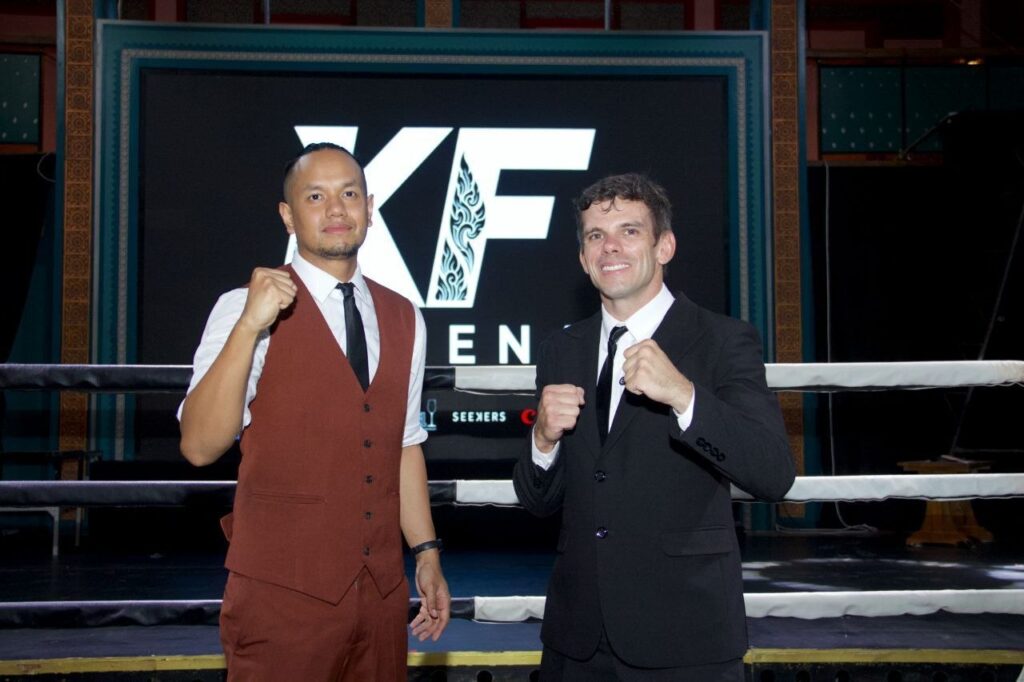
The dialogue dives straight into the gravity of their brand mantra, “We Don’t Play Kun Khmer,” unpacking the mechanics of their sustainable “Fighter-First Economy” that prioritizes long-term athlete safety, medical protection, and career architecture. From scaling Krama-patterned gear into an international lifestyle brand to forging powerhouse regional alliances, Crush details the exact blueprint intended to cement Phnom Penh’s legacy alongside Las Vegas and Bangkok as a premier global combat sports hub.
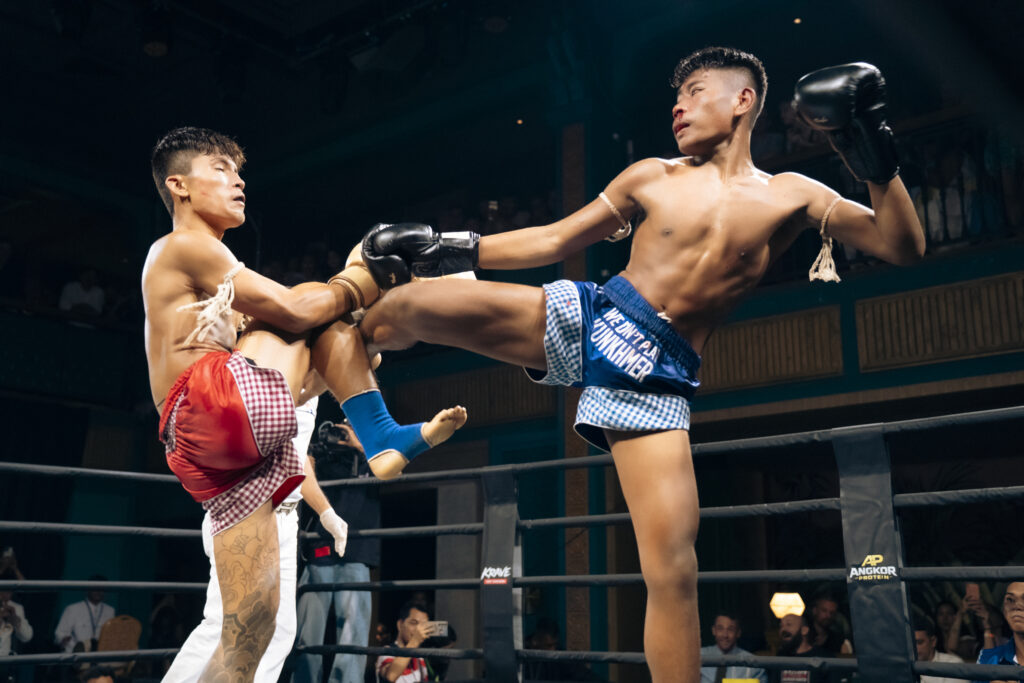
Q: In your launch and private previews, you emphasized that KF Arena is not just a standard stadium, but a theater at the Aquation Theatre on Koh Pich. You’ve curated a space where Kun Khmer shares the ring with traditional dance, Bokator, and modern performance. Kun Khmer has historically targeted the popular masses in Cambodia. What made you both realize that there was an untapped, premium market, including expats, tourists, and the rising middle class, hungry for an upscale, theatrical presentation of Cambodian combat sports?
A: It started when I hosted Sov Men on a podcast last year for Gods of Martial Arts in Vietnam. He gave me the realization that Kun Khmer is a 1,000-year-old masterpiece that simply lacked the 21st-century platform it deserves. During my time in Vietnam, I saw a martial arts scene that was explosive but invisible to the global mainstream; in Cambodia, the passion is already at a fever pitch, it just needed to be treated with the reverence of a high-end theatrical experience. We saw a rising middle class and a global community hungry for authenticity, not just another sports broadcast.
Q: Your brand’s slogan, “We Don’t Play Kun Khmer,” serves as a stark reminder of the gravity of combat sports, highlighting that unlike team sports, one second of inattention in the ring means a knockout. This slogan carries immense weight. How does this philosophy shape the way you select, train, and protect your fighters under the Khmer Flow ecosystem, especially when presenting the raw, uncompromising intensity of the sport to international viewers?
A: This mantra is the heartbeat of our “Fighter-First Economy”. Coming from a D1 wrestling background and competing in grappling across Southeast Asia, I know the difference between a game and a fight. Under the Khmer Flow ecosystem, this philosophy means we don’t just book matches; we architect careers, ensuring our fighters have the training, medical protection, and media platform they need to showcase the raw intensity of the sport while staying safe.
Q: Combat sports is a highly competitive global business dominated by established giants like Muay Thai and MMA promotions (e.g., ONE Championship). You are launching a monthly format with ambitions to scale to a permanent weekly destination. From a purely market-driven perspective, why now? What unique commercial gap in the global martial arts industry does Kun Khmer fill, and what is your strategy to attract international broadcasters and major corporate sponsors to KF Arena?
A: We aren’t just launching a promotion; we are architecting an ecosystem and “raw” showcase of fighters who have the opportunity to have global recognition and success. The global market is saturated with the same old cage fights, but KF Arena, with the offering of Kun Khmer and MMA fights, offers a unique, culturally reverent soul that giants like ONE often bypass. We provide the consistent volume needed for international broadcasters and corporate sponsors to see that we aren’t a one-off event, and a premium destination for premium sports entertainment.
Q: Sov Men has expressed a clear ambition to replace foreign equipment in the ring with pieces carrying a 100% Khmer identity, featuring the national flag, localized colors, and Krama patterns on the gloves. How central is merchandise and localized equipment design to your global scaling strategy? Do you see KF Arena evolving beyond event promotions into a global lifestyle and gear brand that exports Cambodian heritage to gyms worldwide?
A: Merchandise is everything when you’re exporting a culture. We want every gym from New York to Saigon to have pieces of Khmer identity, whether it’s Krama-patterned gloves or gear that carries the spirit of Angkor. KF Arena is the catalyst to evolve beyond events into a global lifestyle brand that literally exports the heritage of the Kingdom.
Q: KF Arena is officially sanctioned by the Kun Khmer and Bokator Federations, and you’ve placed a heavy emphasis on holding amateur and interclub bouts to cultivate the next generation. To capture a truly global audience, a sport needs international practitioners and cross-border rivalries. How does KF Arena plan to scout and develop international fighters, and do you have plans to take the KF Arena event format on a global tour outside of Cambodia?
A: “A rising tide lifts all ships,” and that tide starts at the grassroots level. We are building a “Fighter-First” content machine that documents the journey from the first amateur bout to the main event. Our plan is to leverage my network in Vietnam and across Southeast Asia to scout international talent and eventually take the KF Arena format on a global tour, bringing the Kingdom’s art to the world stage.
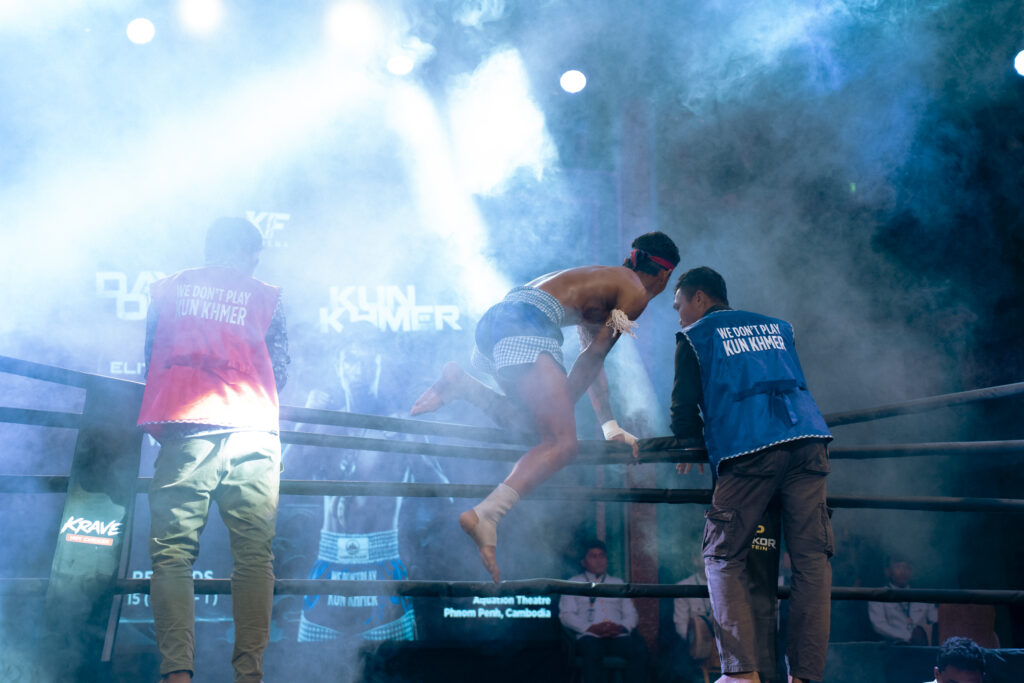
Q: Khmer Flow evolved from a passionate coaching venture years ago into a
full-scale ecosystem, driven by your collective experiences training alongside
legends like Chan Rothana and Sen Bunthen. You both bring distinct backgrounds to this venture. How do your individual strengths complement each other when navigating the delicate balance of preserving sacred martial traditions while aggressively modernizing the sport’s image for the digital age?
A: Sov brings the cultural vision and the deep heritage of Kun Khmer, while I bring the media strategy and the experience of building combat ecosystems from zero to national recognition. I like to think of myself as the “hopeless romantic” of martial arts, and together we balance the sacred preservation of tradition with the aggressive modernization needed for the digital age.
Q: Your network spans interesting cross-promotional alignments, including
ties with Lethwei FC and local European Chambers of Commerce. Can you shed some light on your partnership strategy? How do alliances with other regional martial arts (like Lethwei) and international business chambers help validate Kun Khmer as a premium tourism and entertainment product for Cambodia?
A: Alliances with partners like Nick Chapman of Lethwei Fighting Championship and Dave LeDuc of Kong MMA reinforce the authenticity and strength of ancient martial arts. Our Vietnam-based partners, such as Carey Wass of Vietnam Pro Wrestling or Walt Power at The Grand Ho Tram, help us validate that martial arts is a premium entertainment product, not just a fight in a field. By connecting with business chambers and regional arts like Lethwei, we position Kun Khmer as a cornerstone of Cambodia’s tourism and a legitimate asset for international business interests.
Q: You’ve set a highly ambitious timeline for the arena’s growth over the next few years, changing the narrative of how combat sports are consumed in Phnom Penh. Five years from now, when international fight fans think of global combat sports hubs like Las Vegas, Tokyo, or Bangkok, where does Phnom Penh and KF Arena sit in that hierarchy? What is the ultimate legacy you want to leave for Kun Khmer?
A: In five years, I want Phnom Penh to be mentioned in the same breath as Las Vegas or Bangkok as a global hub for combat sports. The legacy we want to leave is a permanent, thriving “Fighter-First Economy” where Kun Khmer is recognized globally as the masterpiece it is, and where the next generation of Cambodian athletes can build a professional life they are proud of. I am honored to be part of such a transformative era in martial arts. With Sov Men as my partner, I am confident that together we will shape the trajectory of combat sports.
This interview is part of a series of New Voices of Cambodia.